
What Winter in Boone Is Actually Like
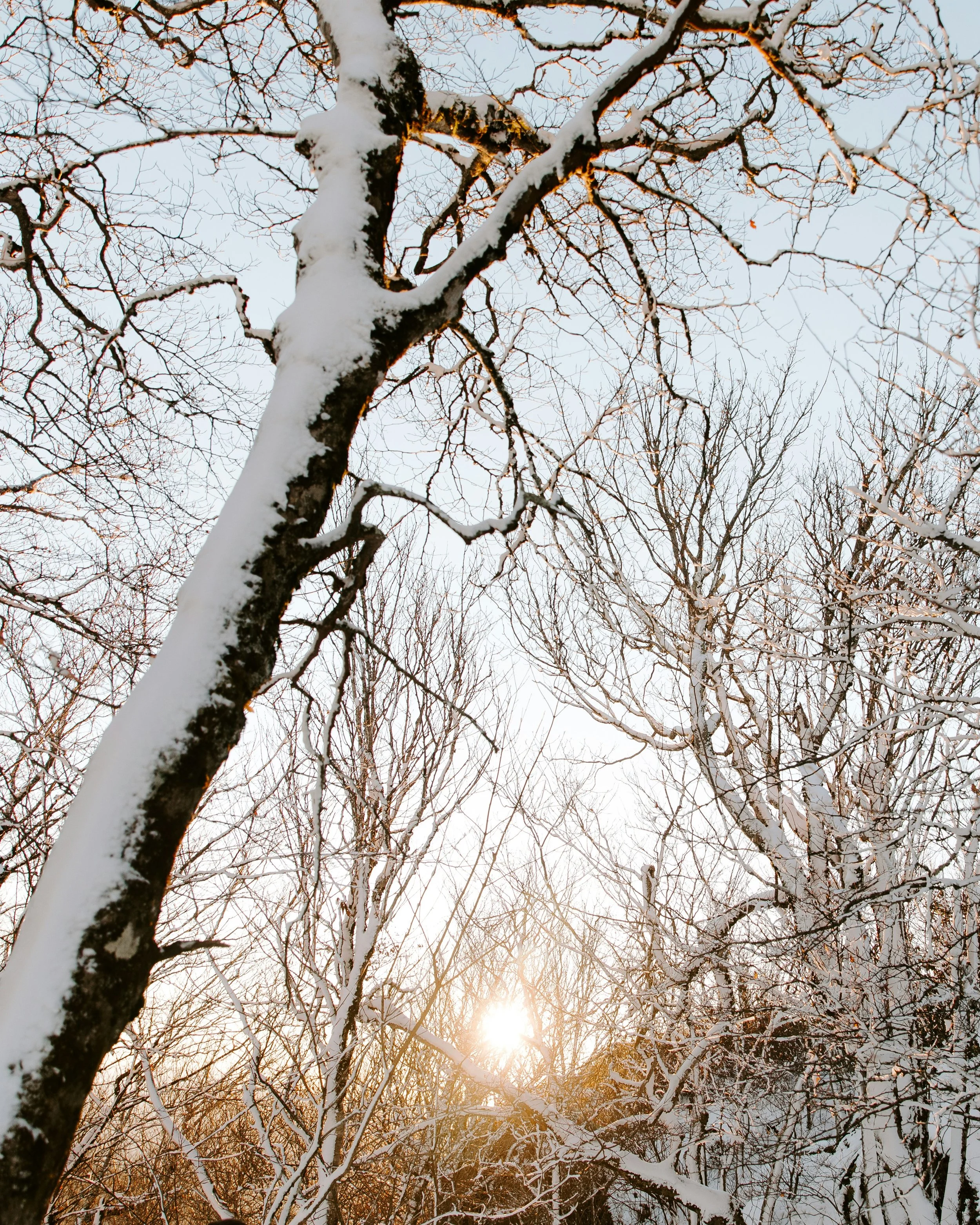
Every second-home buyer asks this. Almost nobody answers it straight, because the honest answer is bad for a sale in about one out of five cases.
Which is exactly why it is worth writing down.
Winter in Boone, NC averages 25.6 inches of snow across about 14.2 snow days a year, with a January average high of 41 and low of 22, and roughly 127 days a year at or below freezing. That is more than Asheville and far less than New England. The snow is not the hard part. Ice, wind, freeze-thaw cycles and your own driveway are the hard parts. All-wheel drive helps you go and does nothing to help you stop. Higher elevation means more of everything: Banner Elk averages 31.4 inches.
Here is the rest of it.
How much snow does Boone actually get?
25.6 inches a year on average, spread across about 14.2 days with measurable snowfall. That is NOAA's 1991 to 2020 climate normals, via Current Results.
For scale from the same dataset: Asheville gets 11.5 inches. Charlotte gets 3.5. Raleigh gets 5.2. Banner Elk, at 3,895 feet, gets 31.4, the most in North Carolina.
The average hides the shape of it. Boone does not get 2 inches fourteen times. It gets a dusting that melts by noon, then a nothing week, then 9 inches over a weekend that shuts things down, then a nothing month.
So "25 inches" sounds mild and does not feel mild, because it arrives in lumps.
Elevation is the variable that matters most. Boone sits at 3,333 feet. Beech Mountain's peak is 5,506. Between those two points the weather is genuinely different on the same afternoon.
How cold does it get?
Colder at night than most people picture.
NOAA's 1991 to 2020 normals, via Current Results, put Boone's monthly averages at:
| Month | Average high | Average low |
|---|---|---|
| December | 45°F | 25°F |
| January | 41°F | 22°F |
| February | 45°F | 24°F |
| March | 52°F | 29°F |
About one-third of winter nights drop to 20°F or below. The thermometer reaches freezing or lower on roughly 127 days a year.
Note what those daytime highs are doing. Above freezing most days, below freezing most nights.
That is the freeze-thaw cycle, and it is the single most underrated fact about winter here. Snow melts during the day, refreezes overnight, and the road that was fine at 4pm is glazed at 7am.
The wind is the other thing photos do not carry. At elevation, 30 degrees with wind is a different animal from 30 degrees in a valley.
Do the roads close?
Some do. Which ones, and for how long, comes down to a published priority list.
NCDOT's snow-clearing policy works in four tiers. First, the Bare Pavement System: interstates and four-lane divided primary routes. Second, U.S. and N.C. routes not in that system. Third, other paved secondary roads. Fourth, unpaved secondary roads.
So US 421 and NC 105 get attention early. The paved secondary road up to your ridge gets attention later. The gravel one gets attention last.
NCDOT does not clear sidewalks, driveways or driveway entrances. That last one catches people: the plow that clears your road will berm the end of your driveway, and that berm is yours.
The Blue Ridge Parkway is its own thing. The National Park Service closes sections to vehicles through winter as snow and ice require, and has closed the entire route preemptively ahead of large storms. Some Parkway sections in Watauga also remain closed from Hurricane Helene damage. Check the Parkway's road closure page before you plan a drive on it, always.
Do I need all-wheel drive?
Not strictly. And it will not save you the way people think.
All-wheel drive helps you accelerate on a slick surface. It does not help you brake or turn on ice. Every winter, somebody in an AWD SUV goes off a mountain road at a speed a front-wheel-drive sedan would never have attempted.
What actually matters, in order:
Tires. Real winter tires or good all-terrains beat AWD on worn all-seasons, every time.
Your driveway's grade. This is the real question. A steep gravel driveway that faces north and never sees sun is a genuine, recurring, expensive problem. A short flat one is not.
Ground clearance, if you are on an unpaved road.
Whether you can stay home. People who can work from home for two days a year barely notice winter here. People with a fixed 7am commute over a ridge notice it a lot.
Before you buy, stand in the driveway and ask what it costs to keep passable. Gravel, grading, plowing, salt. Ask the seller for the actual number.
What closes in February?
Less than you think, and more than the tourism photos suggest.
The town itself keeps running. Appalachian State is in session, the hospital runs, the grocery stores are open. With 18,124 students on the Boone campus in fall 2025, per Appalachian Today, Boone has a year-round population that a purely seasonal resort town does not.
The seasonal businesses are a different story, and they vary year to year. Some restaurants and shops in the smaller towns cut days or close for a stretch in the off season. We are not going to list specific businesses here, because those schedules change annually and a wrong one is worse than no list. Check hours before you drive somewhere in February.
What we can say plainly: Blowing Rock had 1,376 residents at the 2020 census and a tourism-driven economy. In February a real number of houses on a given street are dark. Boone, at 19,929 residents, does not feel like that.
What is actually good about it?
The skiing is right there, which is the whole reason a lot of people buy.
Sugar Mountain, Beech Mountain and Appalachian Ski Mountain all sit within a short drive. In the 2025 to 2026 season, Sugar opened November 11, App Ski Mtn opened November 29 and ran through March 15, and Beech opened December 5 and ran early access through March 8, per WRAL.
Worth noticing in that timeline: Beech pushed its opening back twice to make more snow. Southern skiing runs on snowmaking, and snowmaking runs on cold nights. Warm Decembers happen.
The other good part is quiet. The traffic that defines October and July is gone. You can get a table. You can park downtown. The mountains look better with the leaves off, and almost nobody says that out loud.
And the summers are the payoff. Boone hits 90 degrees about once every two to three years.
Who is going to be miserable here?
Let's be direct, because this is the part that saves people money.
You will probably struggle with winter in Boone if you need a guaranteed, predictable commute five days a week over a ridge road. If a long grey stretch genuinely wrecks your mood. If you are set on a house with a steep north-facing driveway and no plan for it. If you want a walkable downtown scene year round in a town of 1,376 people. Or if you are buying purely on an October visit.
You will probably love it if you ski, if you have flexibility on the two or three worst days a year, if you like a real off season, and if you would rather have 41 degrees in January than 95 degrees in July.
Come in the second week of February. Drive the actual road. Sit in the actual driveway.
If you still want it, you want it.
Frequently asked questions about winter in Boone, NC
How much snow does Boone, NC get per year? About 25.6 inches on average, across roughly 14.2 days with measurable snow, based on NOAA's 1991 to 2020 climate normals. Banner Elk, at higher elevation, averages 31.4 inches.
How cold does Boone, NC get in the winter? January averages a high of 41°F and a low of 22°F. About a third of winter nights drop to 20°F or below, and the temperature reaches freezing or lower on roughly 127 days a year.
Do you need a 4x4 in Boone, NC? Not for most people. Good tires matter more than drivetrain, because all-wheel drive helps with acceleration and not with braking or steering on ice. The bigger question is the grade and orientation of your own driveway, which nobody plows for you.
Does Boone, NC shut down when it snows? The town keeps functioning. Appalachian State, the hospital and the grocery stores operate year round. NCDOT clears U.S. and N.C. routes before paved secondary roads and unpaved roads last, so how long you are stuck depends on which kind of road you live on.
When does ski season start in Boone, NC? It depends on the weather, because Southern resorts rely on snowmaking. In the 2025 to 2026 season, Sugar Mountain opened November 11, Appalachian Ski Mountain opened November 29, and Beech Mountain opened December 5 after pushing its date back twice for snowmaking.
Is the Blue Ridge Parkway open in winter? Sections close to vehicles during snow and ice, and the National Park Service has closed the full route preemptively ahead of major storms. Some Watauga County sections also remain closed from Hurricane Helene damage. Check the Parkway closure map before you go.
Been through a few winters here and think we undersold something? Tell us.
Boone Days is an independent guide to Boone and the High Country, covering Watauga and Avery counties.
